Searching for a web development agency is one of those tasks that starts simple and gets complicated fast. There are thousands of agencies, hundreds of ranking articles, and no shortage of opinions about who is the best and why. Most of what you find is written by agencies promoting themselves. The rest is too general to be useful.
This guide is different. It is written for business owners who need a website built or improved and want to understand the landscape before they talk to anyone trying to sell them something. By the end, you will know what a web development agency actually does, what you should pay, how to find one that is right for your situation, and what questions to ask before signing a contract.
What Is a Web Development Agency?
A web development agency is a company that builds and maintains websites and web applications for clients. Unlike a freelance web developer, an agency brings a team: typically a project manager, one or more developers, a designer, and sometimes specialists in areas like SEO, content, or quality assurance.
The team structure is what separates agencies from individual contractors. When you hire a freelancer, you are hiring one person’s time and skills. When you hire an agency, you get a coordinated team working toward a shared deliverable, with built-in review processes, handoff documentation, and accountability structures that a solo developer cannot provide.
Not all agencies are the same size or scope. A boutique agency may have three to eight people and take on a limited number of clients at a time. A mid-size agency may have 20 to 100 employees and run multiple projects simultaneously. Enterprise agencies serve Fortune 500 companies with dedicated account teams and multi-year engagements.
For most small businesses, the right fit is a boutique or mid-size agency with genuine experience in your type of project.
What Does a Web Development Agency Do?
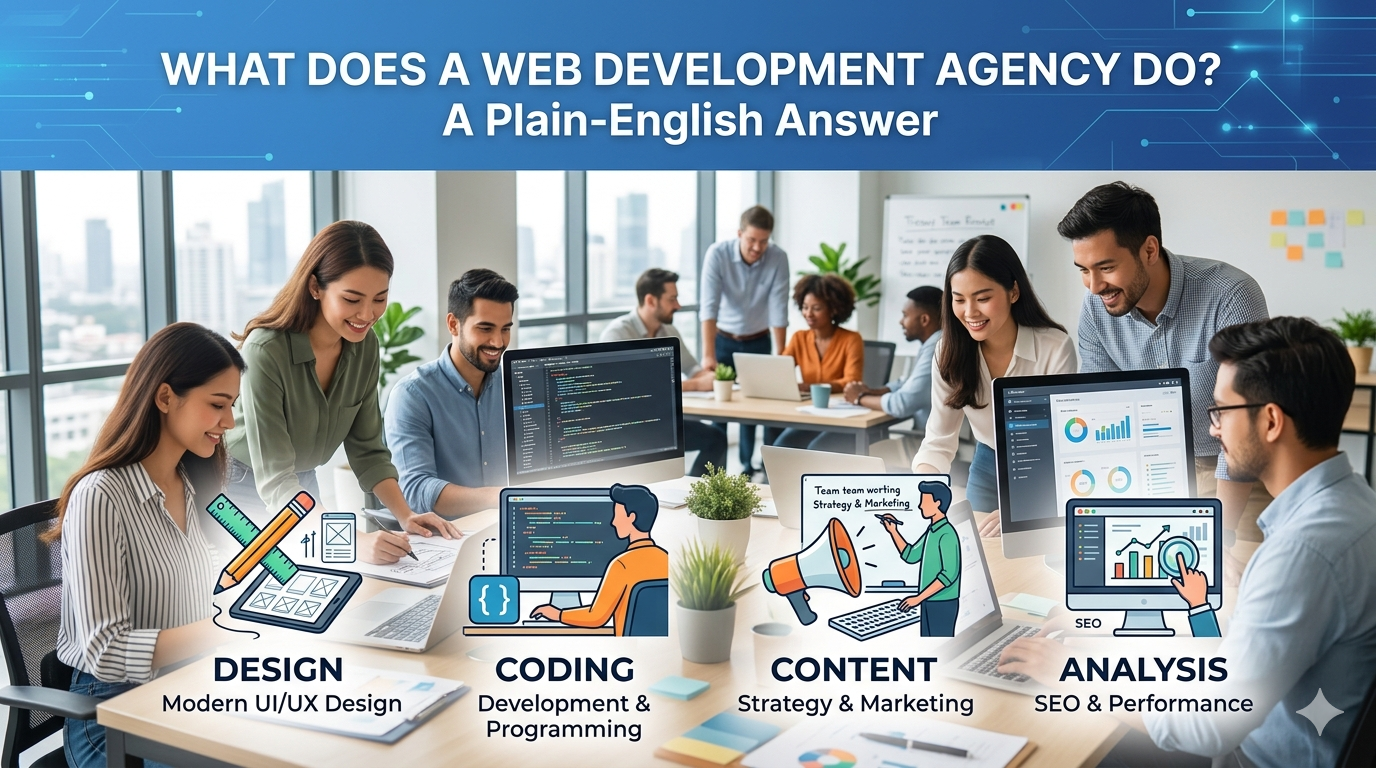
The short answer: they build and maintain web-based digital products. The fuller picture covers a broader range of services than most people expect.
Website design and development is the core offering. This includes visual design (how the site looks), front-end development (the code that renders in a browser), and back-end development (servers, databases, business logic). Most agencies handle all three, though some specialize in one area.
Content management system (CMS) implementation is part of nearly every project. According to W3Techs, WordPress alone powers over 43% of all websites on the internet, making it the most common CMS platform agencies work with. Agencies configure and customize these systems so non-technical staff can update content without developer help.
E-commerce development involves building online stores with product catalogs, shopping carts, payment gateways, and inventory management. This is a specialized skill set, and not every general web agency does it well.
Web application development goes beyond marketing sites into functional software: booking systems, customer portals, dashboards, SaaS platforms. If your project has users logging in and doing things, you likely need a development, focused agency rather than a design first one.
Ongoing maintenance and support keeps sites secure, updated, and performing well after launch. Many agencies offer retainer based maintenance plans covering security updates, backups, uptime monitoring, and small change requests.
SEO and performance optimization may or may not be included depending on the agency. Some agencies treat SEO as a core part of every project; others hand it off to a separate digital marketing team or leave it to the client.
For a deeper look at the full scope, see What Does a Web Development Agency Do? A Plain English Answer.
Types of Web Development Agencies
Understanding agency types helps you match your project to the right kind of partner.
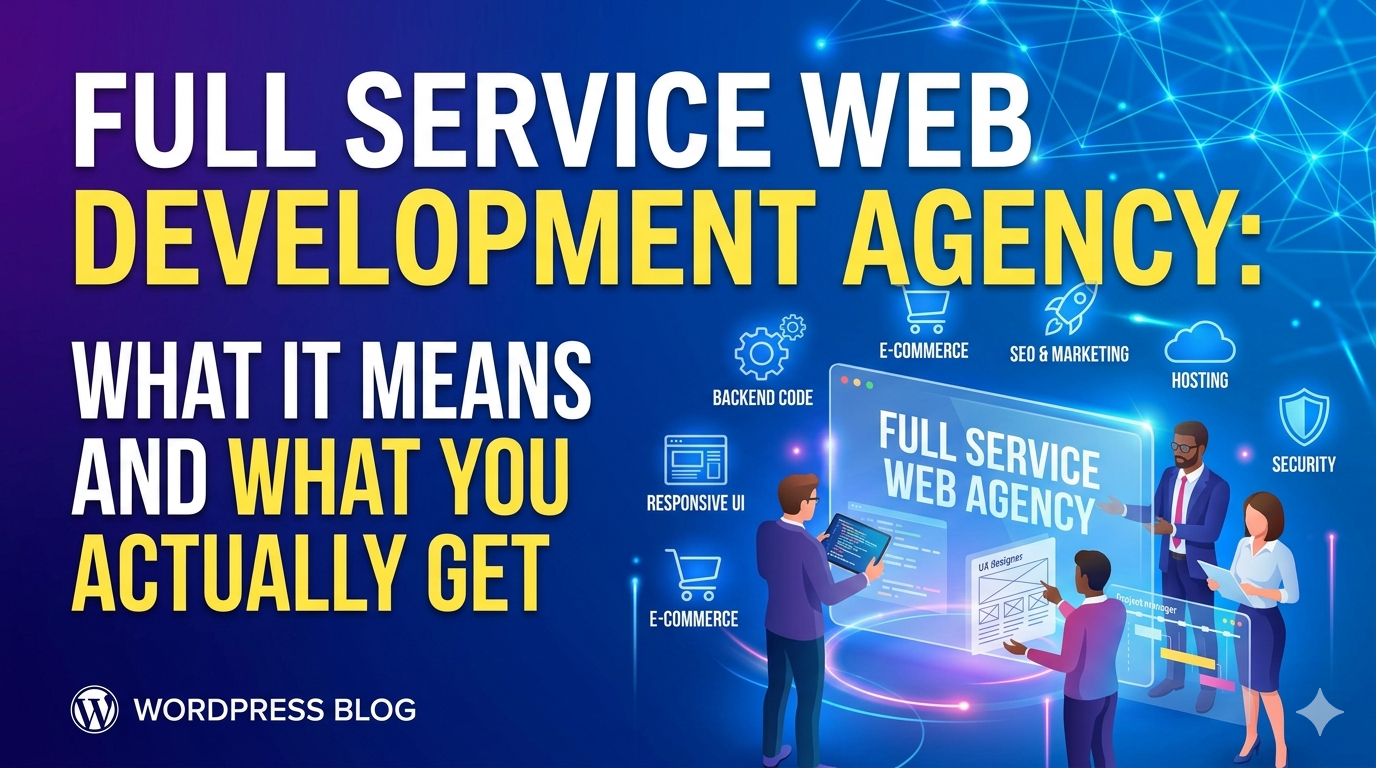
Full-service agencies handle everything from strategy to design to development to marketing. You get a single point of contact for your entire digital presence. This is convenient but often more expensive, and quality can vary across disciplines. For more on what full-service means in practice, see Full Service Web Development Agency: What It Means and What You Actually Get.
Development focused agencies specialize in building things. They are often stronger on the technical side and weaker on design and content. Good for complex web applications and custom platform builds where engineering quality matters most.
Design led agencies are strong on branding, UX, and visual design but may outsource or de-prioritize the technical implementation. Good for brand-driven projects where look and feel is the priority.
Niche specialists focus on a specific platform (WordPress agencies, Shopify agencies, React specialists) or industry (healthcare, law firms, e-commerce). Deep expertise in a narrow area can be an advantage if your project fits their niche.
Affordable boutique agencies serve small businesses and startups with projects that premium agencies would not take. Quality varies widely in this tier, but the best boutique agencies deliver enterprise level work at accessible prices.
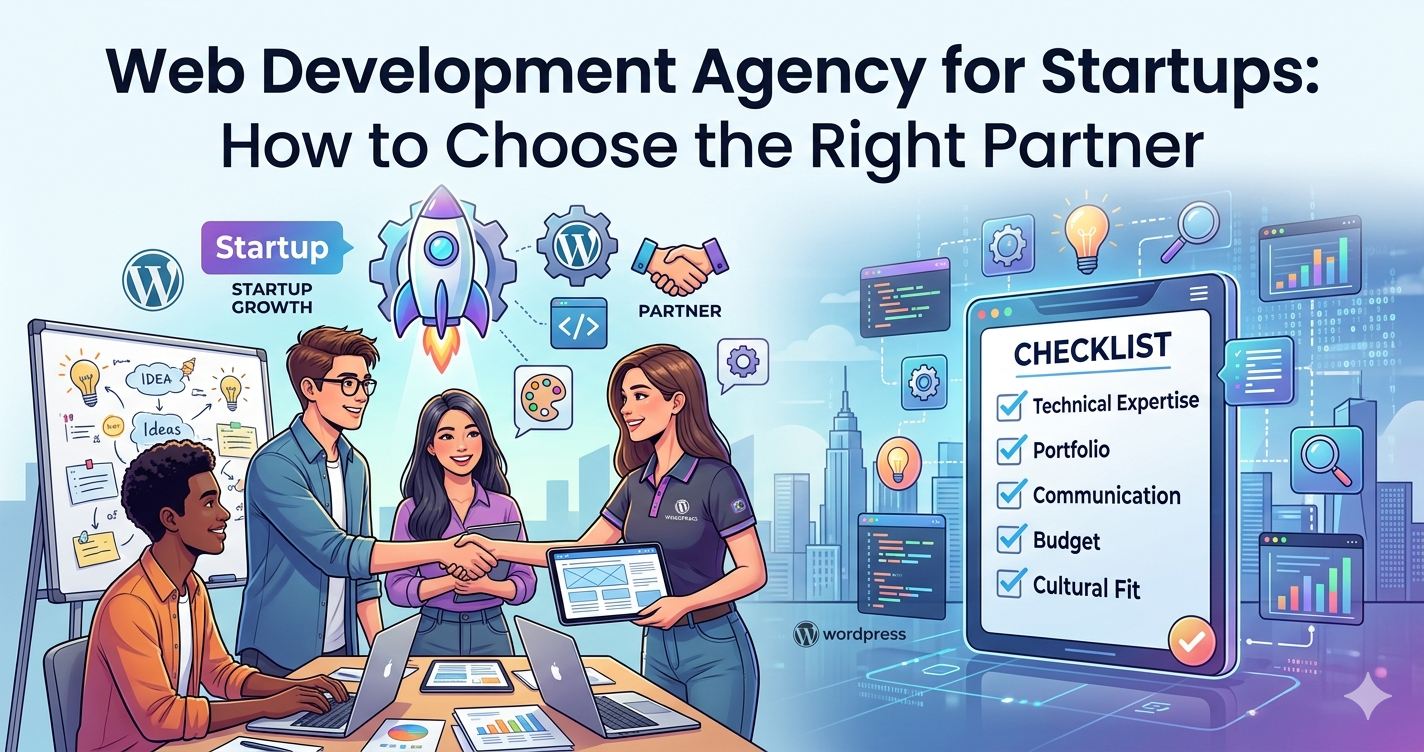
DevVerx sits in this last category: a boutique agency built specifically for small businesses and startups that need quality work without a six figure budget. Learn more about our web development services. For startup specific considerations, see Web Development Agency for Startups: How to Choose the Right Partner.
How Much Does a Web Development Agency Cost?
Pricing is the question everyone wants answered and the one most agency websites avoid. Here is a realistic breakdown.
Simple brochure or service website (5-15 pages, standard CMS, no custom functionality): $2,500 to $8,000. At the lower end, this typically means a theme based build with minimal customization. At the higher end, you get custom design, more refined UX, and better technical implementation.
Mid-tier business website (15-40 pages, custom design, contact forms, basic integrations): $8,000 to $25,000. This range covers most small-to-medium business websites that need to look professional and convert visitors into leads.
E-commerce website (online store with product catalog, checkout, payment processing): $10,000 to $50,000+. E-commerce complexity varies enormously based on product volume, custom features, inventory system integrations, and platform choice.
Custom web application (software with user accounts, data management, custom workflows): $25,000 to $150,000+. The range here is wide because the scope of web applications varies more than any other project type.
Ongoing retainers for maintenance, support, and iterative development typically run $500 to $3,000 per month depending on the level of activity.
What drives cost up: custom design from scratch, complex integrations (ERP, CRM, payment systems), tight timelines, ongoing content needs, and post launch support requirements.
What keeps cost down: using a proven CMS like WordPress, providing your own content, having clear requirements upfront, and choosing an agency sized appropriately for your project.
For a detailed breakdown by project type, see Web Development Agency Pricing: What It Really Costs in 2026.
Web Development Agency vs. Freelancer
The agency-vs-freelancer decision is one of the most common crossroads for business owners. Both have legitimate use cases. The answer depends on your project’s complexity, timeline, and risk tolerance.
Choose a freelancer when: your project is well-defined and simple, you have an existing technical team who can manage the engagement, your budget is under $3,000, or you need a specific narrow skill (logo redesign, landing page copy, one-page site).
Choose an agency when: your project involves multiple disciplines (design, development, content, SEO), you need the project managed for you rather than managing a contractor yourself, you want accountability and a formal contract with defined deliverables, or the project is business-critical enough that a single person going dark mid-project would be a serious problem.
The hidden cost of freelancers is coordination. When you hire three separate freelancers for design, development, and SEO, you become the project manager by default. For business owners without technical background, that coordination load often derails projects.
For a full comparison, see Web Development Agency vs. Freelancer: Which Is Right for Your Business?
Web Development Agency vs. In-House Developer
Hiring a developer in-house is a third option that comes up as businesses grow. An in-house developer or small internal team offers availability, institutional knowledge, and alignment with company culture. The tradeoff is significant: hiring, managing, and retaining technical staff is expensive and difficult.
A mid-level web developer in the US costs $90,000 to $130,000 per year in salary plus benefits, recruiting costs, and overhead. For that budget, you could engage a quality agency for multiple projects per year without the management overhead or the risk of a bad hire.
In-house makes sense when you have ongoing, high-volume development needs that would fill a full-time role consistently. For most small businesses, project-based agency work is the more cost-effective model.
See the full comparison in Web Development Agency vs. In-House Developer: Pros, Cons, and the Right Choice.
How to Find a Web Development Agency Near You
Most people search “web development agency near me” because they want someone local: easier communication, shared time zones, and the reassurance of being able to meet in person. Those are legitimate preferences, but they are not the best filter for finding quality.
Geography should be a secondary consideration, not a primary one. The best agency for your project may be in a different city or state. What matters more: portfolio quality, industry experience, communication responsiveness, and references from past clients.
That said, there are advantages to local agencies beyond convenience. A US-based agency understands your market, speaks the same business language, operates in your time zone, and is subject to US contract law. That last point matters when things go wrong.
How to find agencies regardless of location:
- Search Google for your project type plus your industry: “web development agency for restaurants” or “e-commerce development agency small business”
- Use directories like Clutch.co and DesignRush, which list verified agencies with client reviews and portfolio work
- Ask in your industry networks and peer groups for referrals
- Look at websites you admire and check the footer or “built by” credit
For a practical guide to the search and vetting process, see Web Development Agency Near Me: How to Find and Vet the Right One.
Is It Worth Hiring a Web Development Agency?
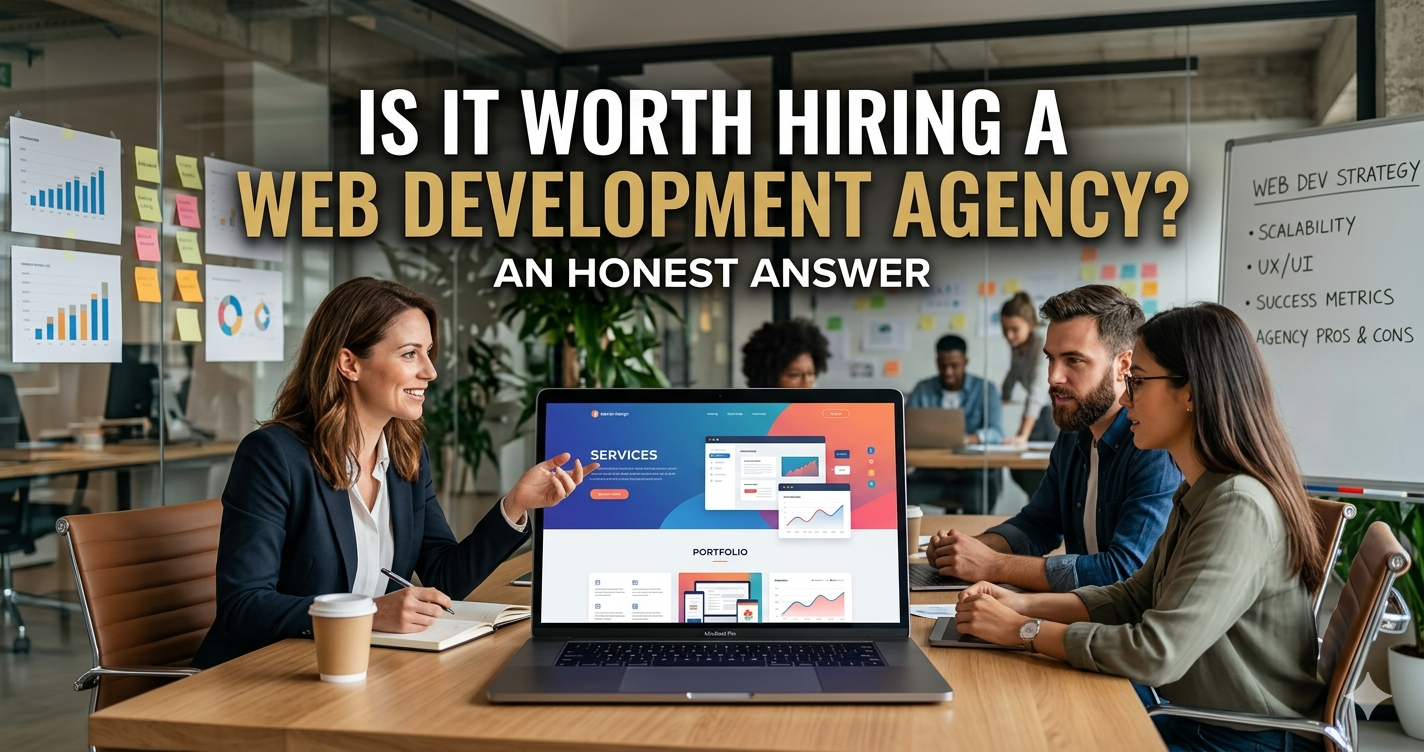
For the majority of businesses with a serious digital presence goal, yes. But “worth it” depends on context.
It is worth hiring an agency when:
- Your website is a meaningful revenue channel or lead source
- You do not have internal technical resources
- The project scope is beyond a simple template setup
- You have tried DIY or freelancers and hit limitations
- Time is a constraint and you need a managed outcome
It may not be worth it when:
- You are testing an idea and need the cheapest possible proof of concept
- Your website needs are genuinely simple (a one page site for a local service business)
- You have an internal team that can handle the work with light outside support
- Your budget is below the minimum threshold for agency quality work
The honest version of this question is: what is the cost of a bad website? For businesses that depend on their website for revenue, the cost of a cheap, slow, or poorly converting site compounds every month. An agency investment that produces a 20% increase in conversion rate pays for itself quickly.
For a thorough cost benefit analysis, see Is It Worth Hiring a Web Development Agency? An Honest Answer.
Custom vs. Template: Which Do You Need?
This question comes up constantly and the answer is more nuanced than “custom is always better.”
Template based builds use pre-designed WordPress themes or website builders as a starting point. They are faster, cheaper, and often sufficient for small businesses that need a professional looking presence without custom functionality. The downside: limited differentiation, potential performance issues from bloated themes, and design constraints that become frustrating as needs evolve.
Custom builds start from a clean slate. The design is built specifically for your brand and user experience goals. The code is lean and built for your use case. Custom builds are slower and more expensive but produce better performance, better differentiation, and better scalability.
A common middle path: custom design implemented on a flexible CMS platform. This gives you original design work without fully custom code, which keeps costs reasonable while avoiding the limitations of off the shelf themes.
For a full breakdown of what to look for in a custom build partner, see Custom Web Development Company: What to Look for Before You Sign.
How to Choose a Web Development Agency
After you have identified candidates, evaluating them comes down to five areas:
Portfolio quality: Does their past work look like what you want? Is it fast, well-designed, and conversion focused? Ask for links to live sites they have built, not just screenshots. You can test any site’s speed using Google PageSpeed Insights to get an objective performance score.
Relevant experience: Have they built projects similar to yours in scope, industry, or technology? A WordPress agency may not be the right choice for a complex web application. An agency that has never worked with e-commerce may struggle with your Shopify build.
Communication clarity: Do they ask good questions? Do they explain things clearly without jargon? Do they respond quickly during the sales process? How an agency communicates before you hire them is usually how they communicate during the project.
References: Talk to past clients. Ask specifically about timeline adherence, budget accuracy, and what happened when problems arose. Every project has problems; the question is how the agency handles them.
Contract and process: A professional agency has a clear proposal process, defined payment milestones, and a written contract. Be cautious of agencies that work on handshake agreements or whose contracts are vague about scope and deliverables.
For a complete vetting checklist, see How to Choose a Web Development Agency: A Practical Guide.
What to Expect During a Web Development Project
Knowing what a typical project looks like helps you set realistic expectations and avoid common frustrations.
Discovery and scoping (1-2 weeks): The agency gathers requirements, asks questions about your goals and audience, and produces a formal proposal. This is where scope is defined and misunderstandings are caught before they become expensive.
Design (2-4 weeks): Wireframes are produced first (structural layouts without visual design), then high fidelity mockups. Client feedback is incorporated through a defined revision process. Skipping wireframes is a red flag.
Development (4-12 weeks): The approved designs are built into a functional website. The timeline varies significantly based on project complexity. A simple brochure site may be built in three weeks; a custom e-commerce platform may take three months.
QA and testing (1-2 weeks): The site is tested for bugs, browser compatibility, mobile responsiveness, page speed, and form functionality. Quality agencies test before asking clients to review; low quality agencies push testing onto the client.
Launch (1-3 days): Domain configuration, hosting migration, final review. A good agency handles the technical launch without requiring the client to manage it.
Post-launch support: Most agencies offer a period of post-launch support (typically 30-60 days) to fix any issues that emerge. After that, ongoing maintenance is typically a separate retainer engagement.
The most common reason projects go over budget or timeline: scope changes after design has been approved. The more clearly you can define what you need upfront, the smoother the project will run.
Working with DevVerx
DevVerx is a web development agency built for small businesses and growth stage companies that need quality work at accessible pricing. We specialize in custom WordPress development, e-commerce builds, and web application development for clients across the US.
What sets us apart: we do not offshore our work, we have transparent pricing, and every project has a dedicated project manager who keeps you informed throughout. We have worked with businesses in e-commerce, professional services, healthcare, hospitality, and technology.
If you are evaluating agencies, we would like to be on your list. Get a free project quote and we will walk you through what your project would look like with our team.
Frequently Asked Questions
How long does it take to build a website with an agency?
Simple sites take 4-8 weeks. Mid-tier business websites take 8-16 weeks. Complex e-commerce or web applications take 3-6 months or more. The most accurate timeline depends on how quickly the client can provide feedback and content.
What is the minimum budget for a web development agency?
Quality agency work generally starts around $3,000-5,000 for simple projects. Below that threshold, you are typically better served by a template website builder or a single freelancer.
Can I hire a web development agency for a small update or one-page site?
Some agencies take small projects; many do not. Boutique agencies and those with retainer clients are more likely to take smaller engagements. Be upfront about scope when reaching out.
What should I prepare before talking to agencies?
Have a clear idea of your goals (more leads, more sales, better user experience), your timeline, your approximate budget range, and any examples of websites you like. You do not need a technical specification, but you should be able to explain what you need the website to do.
How do I know if an agency is good?
Look at live examples of their work. Read their client reviews on Clutch or Google. Ask for references and actually call them. A good agency has no problem providing references because their past clients are happy to talk.