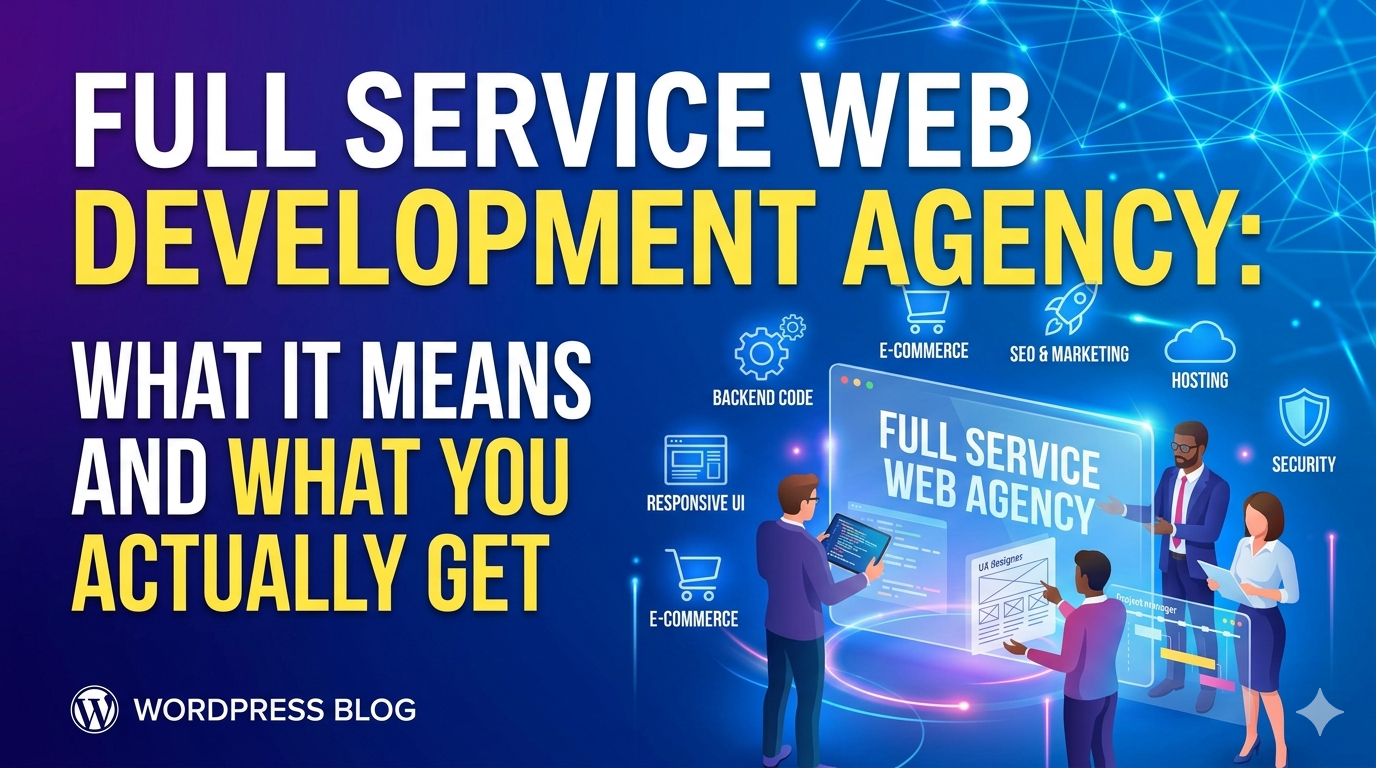
“Full service” is one of those phrases that sounds reassuring but means different things at different agencies. Some agencies use it to describe a team that does design and development. Others use it to mean they handle design, development, content, SEO, and ongoing marketing. A few use it to cover everything from brand strategy to paid advertising.
If you are looking for a full-service web development agency, you need to understand what you are actually asking for before you start talking to agencies. Otherwise, you might hire a “full-service” shop and be surprised when they hand off the SEO to a third party or tell you copywriting is not included.
This guide explains what full-service web development actually covers, when you need it vs. when you do not, and how to evaluate whether a specific agency is as full-service as they claim.
What Full-Service Web Development Means in Practice
The clearest definition: a full-service web development agency handles every discipline required to build and launch a website, without the client needing to hire additional specialists or manage multiple contractors.
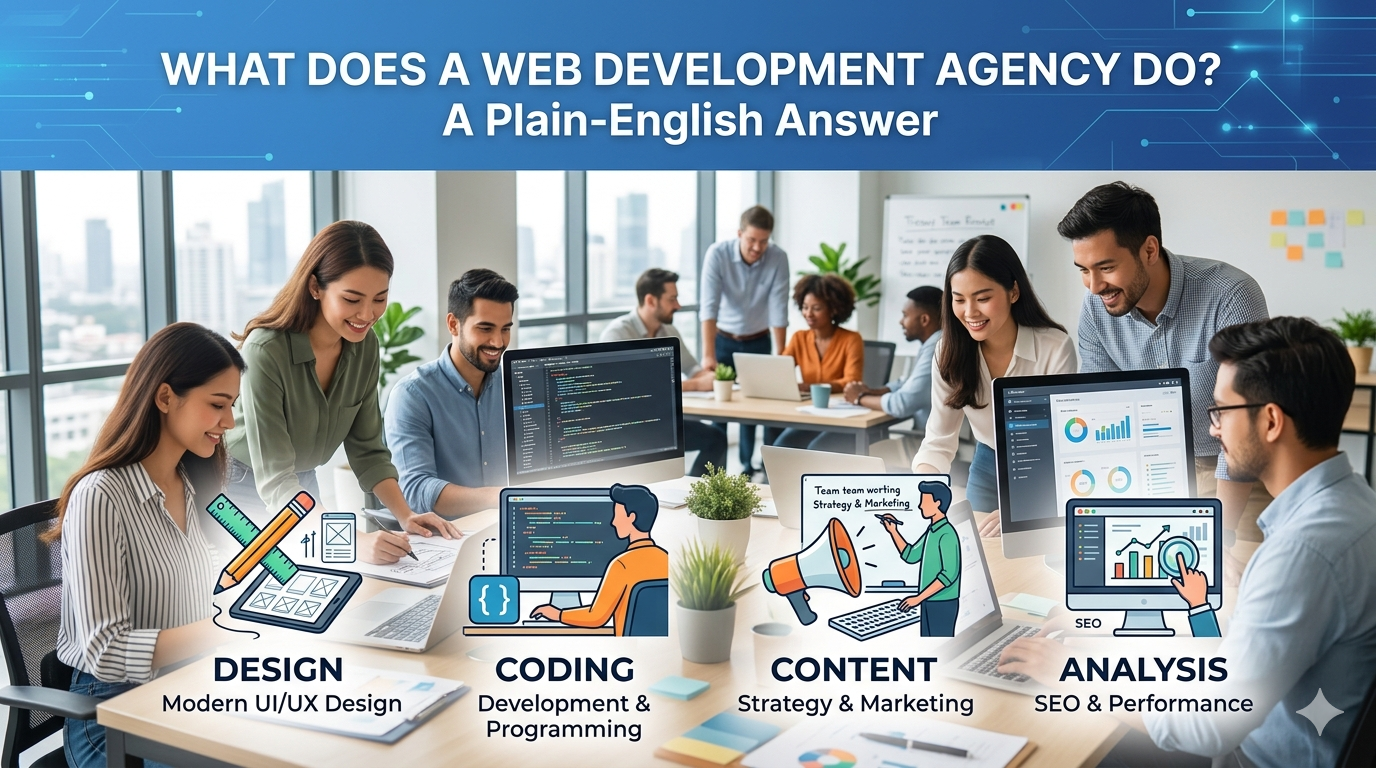
At minimum, a full-service web agency covers:
- Strategy and discovery: Understanding your business goals, audience, competitive landscape, and defining the scope of the project
- UX and design: User experience architecture, wireframes, visual design
- Front-end development: Building the design in code, responsive across devices
- Back-end development and CMS: Content management system, any custom functionality, integrations
- Quality assurance: Testing across browsers, devices, and use cases
- Launch management: Domain configuration, hosting setup, go-live process
- Post-launch support: Fixing issues after launch, basic maintenance
Many full-service agencies also include some or all of:
- Copywriting and content creation
- On-page SEO and technical SEO
- Google Analytics and tracking setup
- Basic photography or image sourcing
- Ongoing maintenance retainers
- Digital marketing services (paid search, social, email)
What separates a true full-service agency from a development shop with a marketing add-on is integration. In a genuine full-service model, strategy informs design, design informs development, and everything is optimized for the same business goal rather than handed off between siloed specialists.
What Full-Service Typically Does Not Include
Even agencies that call themselves full-service typically draw a line somewhere. Common exclusions:
Brand identity design: Logo, brand standards, and visual identity are often a separate engagement. Most web agencies will use your existing brand guidelines; developing them from scratch is brand design work, not web development.
Content strategy and copywriting: Some full-service agencies include this; many do not. If you need help defining your messaging, writing page copy, and building a content library, confirm upfront whether that is in scope.
Ongoing SEO: Technical SEO at launch is typically included. An ongoing SEO program involving keyword research, content production, link building, and monthly reporting is usually a separate retainer.
Paid advertising: Running Google Ads, Meta Ads, or other paid campaigns is outside the scope of most web development agencies, even full-service ones. Digital marketing agencies that also do web development are a different category.
Photography and video production: Sourcing stock imagery is often included. Original photography or video requires a separate production engagement.
The lesson: when an agency describes themselves as full-service, ask directly what is and is not included in a specific engagement. Do not assume the full-service label covers everything.
Full-Service vs. Specialist: Which Do You Need?
Whether you need a full-service agency depends on your situation.
When Full-Service Makes Sense
You do not want to manage multiple vendors: Coordinating a design firm, a development shop, and an SEO consultant separately is project management overhead. If you want one team accountable for the complete outcome, full-service is the right model.
Your project needs integrated thinking: A website built by a design team who has never talked to the SEO team often has structural problems (poor heading hierarchy, slow load times, non-indexable content) that could have been avoided. Full-service integration catches these issues early.
You want a long-term digital partner: A full-service agency can grow with your business. After the initial build, they already know your site, brand, and goals, making ongoing work faster and more effective.
Your team has no digital expertise: If nobody in-house has web or marketing skills, having a single accountable agency to manage is significantly easier than managing specialists independently.
When a Specialist Makes Sense
You have specific, deep technical needs: A web application requiring complex custom software is often better served by a development-specialist agency than a generalist full-service shop. Same logic applies for highly technical e-commerce builds.
You already have some capabilities in-house: If you have an in-house designer and just need development, or an in-house SEO team and just need a technical build, a specialist is more efficient than paying for services you already have.
Your budget requires focus: Full-service costs more because you are paying for a broader team. If budget is constrained, it may be more efficient to hire a specialist for your highest-priority need and layer in other services over time.
You need best-in-class across multiple disciplines: Full-service agencies make trade-offs. A single agency rarely has best-in-class designers, developers, and digital marketers simultaneously. If you need the best possible SEO and the best possible development, you may get better results from category leaders in each discipline.
How to Evaluate Whether an Agency Is Truly Full-Service
Ask for Examples of Full-Scope Projects
A genuinely full-service agency should be able to show you projects where they handled design, development, content, and launch. Ask specifically: “Can you show me a project where your team handled the full scope from strategy to launch, including content?”
If every portfolio example was a design-only or development-only project, they may call themselves full-service but operate more like specialists.
Ask Who Handles Each Discipline
“Full service” sometimes means a small core team that subcontracts most of the actual work. Ask specifically: is your design done in-house or by a subcontractor? Is development in-house? Who writes the copy?
Subcontracting is not inherently bad, but it affects project coordination, communication, and accountability. You should know who is doing the work before you commit.
Review Their Onboarding Process
A full-service agency should have a structured discovery process that covers business goals, audience, competitive landscape, content strategy, and technical requirements before design begins. If the onboarding conversation goes immediately to “what pages do you want?” without context-setting, the strategy component of “full service” may be superficial. The Nielsen Norman Group emphasizes that thorough discovery is what separates strategic digital projects from execution-only engagements.
Understand Their Ongoing Service Model
Full-service often extends beyond the build into ongoing support and marketing. Ask what happens after launch: What does an ongoing relationship look like? What services do they provide on retainer? How is ongoing work priced?
An agency with a strong post-launch service model is more likely to be a genuine long-term partner than one that disappears after the site goes live.
What Full-Service Web Development Costs
Full-service agencies charge more than specialists because you are paying for a broader team and integrated project management. According to agency directories like Clutch.co, full-service web agencies in the US typically have minimum project sizes of $10,000-25,000, reflecting the scope of multi-discipline engagements. Realistic ranges:
Full-service build (design + development + basic SEO + launch): $10,000-40,000 for most small and mid-size business sites.
Full-service with content: Add $2,000-10,000 for copywriting and content strategy depending on volume.
Full-service with ongoing marketing: Monthly retainers of $1,500-5,000+ for agencies that provide post-launch SEO, content, and digital marketing services.
The premium over a specialist agency is typically 20-40%. Whether it is worth it depends on your capacity to manage separate vendors and your preference for integrated accountability.
DevVerx’s Full-Service Approach
DevVerx is a full-service web development agency serving small businesses and growth-stage companies. Our core service covers strategy, design, development, and launch management. We include technical SEO, Analytics setup, and a structured post-launch support period in every project.
For clients who want ongoing digital support after launch, we offer maintenance retainers and development retainer plans that extend the relationship beyond the initial build.
Get a free project quote to see what a full-service engagement with our team looks like for your specific project.
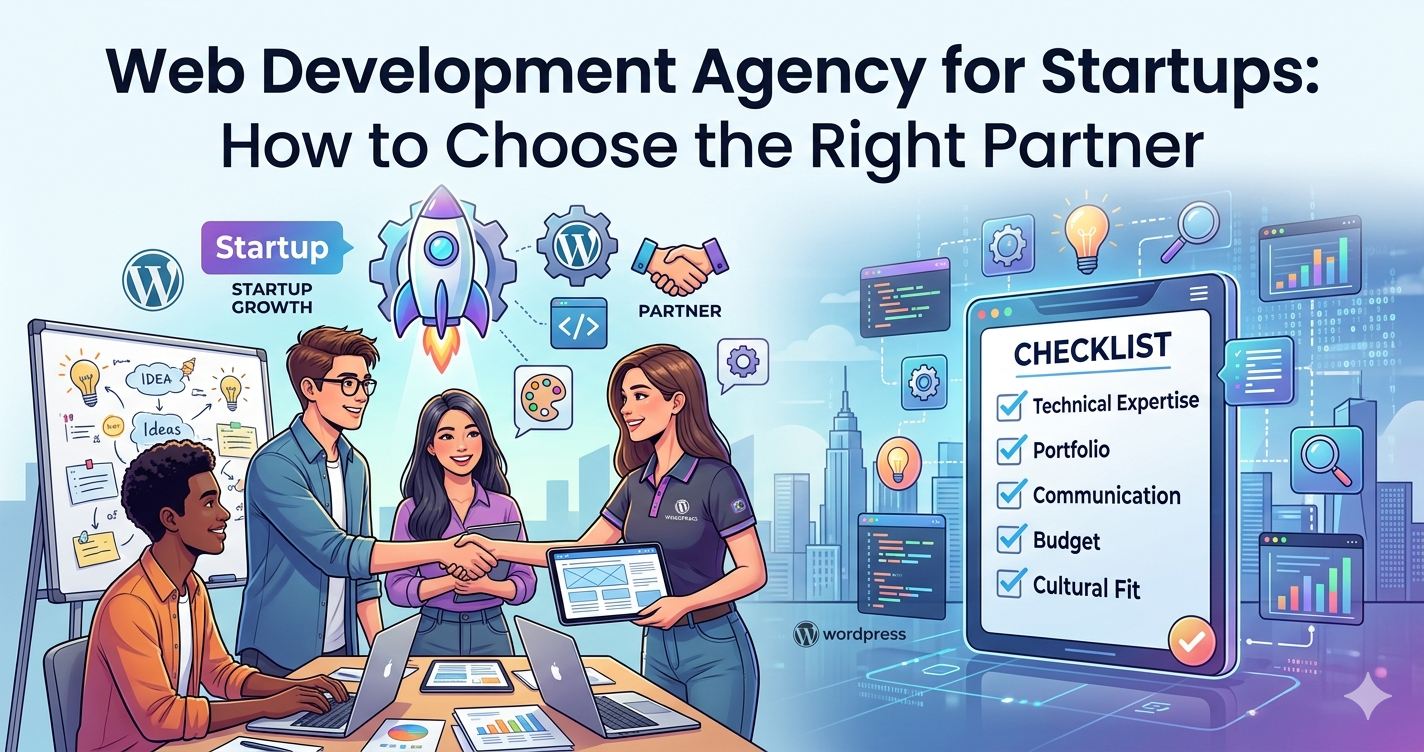
For the full picture on web development agencies, see Web Development Agency: The Complete Guide for Small Businesses. For questions about custom vs. template approaches within a full-service model, see Custom Web Development Company: What to Look For. To understand what a full-service agency charges vs. a specialist, see Web Development Agency Pricing: What It Really Costs in 2026. For startups evaluating full-service options, see Web Development Agency for Startups: How to Choose the Right Partner.
Frequently Asked Questions
What is the difference between a full-service agency and a web development company?
A web development company may focus exclusively on the technical build (code and configuration) without design, content, or marketing services. A full-service agency handles multiple disciplines under one roof, typically including strategy, design, development, and some level of launch and post-launch support.
Do I need a full-service agency or just a web developer?
If you have in-house design and content capabilities, a specialist development company is often more cost-efficient. If you need the complete solution managed for you, full-service is the right fit.
Is a full-service agency more expensive than hiring specialists separately?
The total cost depends on what you need. A full-service agency may charge a premium for integration and coordination. Hiring specialists separately can cost more in your time and coordination overhead. For most small businesses without internal digital expertise, full-service is the more cost-effective choice when you factor in management time.
Can a full-service agency handle SEO?
Most full-service web agencies include technical SEO as part of the build. Ongoing SEO (content, link building, monthly reporting) is usually a separate ongoing service. Confirm what is included before signing.
What should I look for in a full-service web development agency?
In-house team across all disciplines (not fully subcontracted), a structured discovery and strategy process, portfolio examples from full-scope projects, clear post-launch support model, and client references that speak to the integrated experience rather than just the design or just the development.