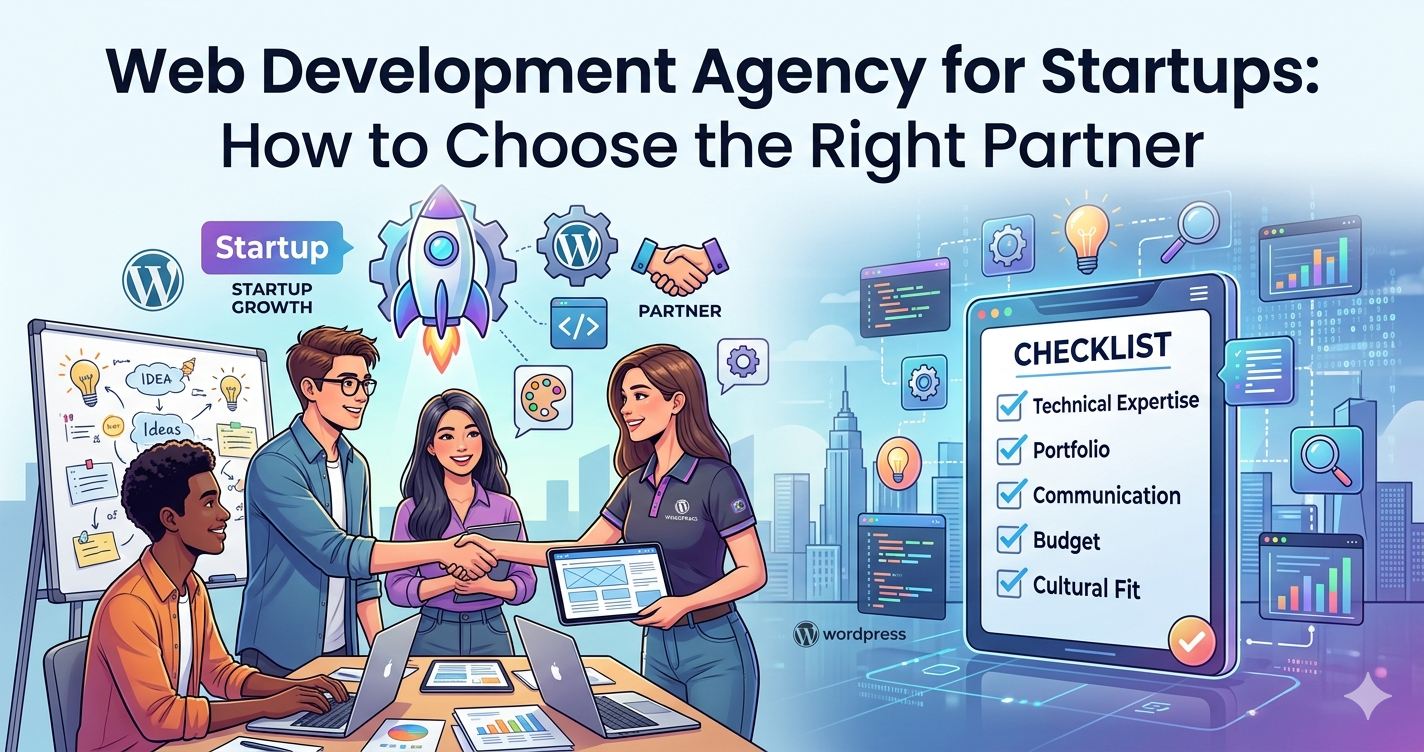
Startups have different needs from a web development agency than established small businesses. Speed matters more. Budget constraints are sharper. The requirements change faster. And the cost of a bad early decision compounds in ways it might not for a mature company.
A startup hiring its first real development agency is also often operating without technical leadership to evaluate vendors. The founder is not a developer. The team is small. There is no CTO to sit in on the sales call and ask the hard questions.
This guide is for that situation: what to look for in a web development agency as a startup, what questions to ask, what mistakes to avoid, and how to set the engagement up for success.
What Startups Need That Small Businesses Often Do Not
Before evaluating agencies, it helps to understand where startup needs diverge from typical business website projects.
Speed to launch: Startups often need something live quickly, whether for investor meetings, early customer testing, or market timing. An agency that takes 20 weeks for a standard business site may not fit a startup’s runway.
Flexibility as requirements evolve: Early-stage product requirements change rapidly. An agency that locks scope tightly and charges heavily for every change is a poor fit for a startup that is still figuring out what it needs.
Scalability from day one: Building something that will need to be torn down and rebuilt in 12 months because it cannot handle growth or new features is expensive. Startups benefit from architecture decisions that anticipate growth, even when the initial build is small.
Technical clarity: A startup without in house technical leadership needs an agency that explains decisions in plain language and is honest about tradeoffs. Agencies that use technical complexity as a shield for bad decisions are particularly harmful to founders who cannot evaluate what they are being told.
Budget efficiency: Startup budgets are often tighter than mid market business budgets, but the quality requirements are often higher than the budget suggests. Finding an agency that delivers quality work at accessible pricing is the core challenge.
Types of Startup Web Projects
The right agency depends heavily on what you are building.
Marketing and launch site: A website that explains what your product does, who it is for, and how to sign up or contact you. This is the most common first web project for startups. A well designed marketing site can often be built quickly, does not require deep technical complexity, and is the most accessible project type for most agencies.
MVP (minimum viable product): A functional prototype or early version of your product that real users can test. This requires application development skills, not just website development. The agencies that build good marketing sites are not always the same as those who build good applications.
SaaS web application: A full software product delivered through a browser. This is complex, requires strong technical judgment, and should be built with scalability in mind from the beginning. Many general web development agencies cannot do this well.
E-commerce startup: An online store for a product startup. Similar to a business e-commerce project but with additional considerations around brand positioning and launch strategy.
Understanding which of these you are building is the first filter for agency selection.
What to Look for in a Startup Agency
Experience with Similar Stage Projects
An agency that has only worked with established businesses may not understand the pace and flexibility startup projects require. Ask specifically whether they have worked with early stage companies and what that looked like. Ask for references from startup clients, not just established business clients.
Honest Scoping and Flexible Processes
Agencies that require a fully defined scope before starting and charge premium rates for any changes are poorly suited to startup work. Look for agencies that build in scope flexibility, have a clear change order process, and can articulate how they handle evolving requirements.
This does not mean scope should be undefined. It means the agency has a process for managing change that does not make every iteration prohibitively expensive.
Technical Decision Transparency
For startups without in house technical leadership, how an agency explains their technical decisions matters as much as the decisions themselves. A good agency can explain why they chose WordPress over a custom back end, or why they recommended a headless architecture, in terms a non technical founder can evaluate.
If an agency’s response to technical questions is “trust us” or jargon heavy explanations that do not actually answer what you asked, that is a significant warning sign for a startup context.
Scalability Focus
Ask about the architecture decisions they are making and how those decisions affect future development. Specifically: “If we need to add [major feature] in 12 months, how does that work with what you are building now?” A thoughtful answer here separates agencies that think about your future from those focused only on delivery.
Speed Without Sacrifice
Startup timelines are often compressed. An agency that can deliver a quality marketing site in 6-8 weeks rather than 16 is genuinely valuable. Ask how they achieve fast turnaround and what trade offs that involves. A fast timeline that requires you to provide all content in two days or accept no design revisions is not actually fast from the client’s perspective.
Equity vs. Cash: Understanding Agency Compensation Models
Some startup-focused agencies or freelancers offer to take equity in lieu of or in addition to cash compensation. This arrangement is worth understanding before you consider it.
When equity for services makes sense: Very early pre revenue stage where cash is severely constrained, you are building a core technical product that makes the developer a genuine co-founder rather than a contractor, and you have a shared vision and complementary roles.
When to avoid it: Building a marketing site or standard MVP where the agency’s work is a service, not a co-founder contribution. Equity should not be exchanged for commodity web services. It creates complexity, potential legal issues with future investors, and misaligns incentives.
Most professional agencies do not take equity. When you encounter one that does for standard project work, understand exactly what you are agreeing to before signing.
Common Mistakes Startups Make When Hiring Web Agencies
Choosing the cheapest option without considering quality: A poorly built MVP or launch site creates a bad first impression with investors and early customers. A $1,500 website that looks unpolished communicates something about the company. Stanford’s Web Credibility Research found that 75% of users judge a company’s credibility based on website design. For your first credibility vehicle, quality matters.
Over building the first version: Building everything you might ever want before you have validated demand is expensive and slow. The right agency helps you define what is truly necessary for launch and builds that, cleanly and well, with a foundation that can grow.
Hiring an agency that does not understand your market: An agency that builds websites for local restaurants may not understand the UX conventions, investor audience expectations, or technical requirements of a B2B SaaS startup. Industry fit matters.
No IP clarity in the contract: Make sure the contract clearly states you own all code, designs, and assets produced for the project. This is a standard term in professional contracts but verify it explicitly. You do not want to discover before a funding round that the agency has retained any rights to your codebase.
Skipping the references step: Startup founders are often in a hurry and skip reference calls. This is one of the most common sources of hiring mistakes. Talk to two or three actual clients of any agency you are seriously considering.
Treating the agency relationship as transactional: The best startup agency relationships are partnerships. The agency knows your business, can advise on decisions, and grows with you. Starting the relationship with a purely transactional mindset leads to worse outcomes than treating the agency as a long term collaborator.
Pricing Expectations for Startup Web Projects
Marketing and launch sites for startups: $4,000-15,000 depending on complexity and design ambition.
MVPs and early stage applications: $15,000-50,000+ depending on feature scope and technical complexity.
Ongoing development retainers (iterative product development post-launch): $3,000-8,000/month.
If your budget is significantly below these ranges, consider whether your project needs a full agency engagement or whether a simpler tool (Webflow, no code MVP platforms, a single skilled freelancer) is a better fit for the current stage. For verified agency pricing benchmarks, Clutch.co lists startup focused agencies with their minimum project sizes and hourly rates.
Working with DevVerx as a Startup
DevVerx works with growth stage startups and early stage companies on custom WordPress development, e-commerce builds, and web applications. We have experience working with founders who are moving quickly and need clear communication, quality output, and a development partner who understands that requirements evolve.
If you are a startup evaluating agencies, get a free project quote and we will have an honest conversation about your project, timeline, and budget.
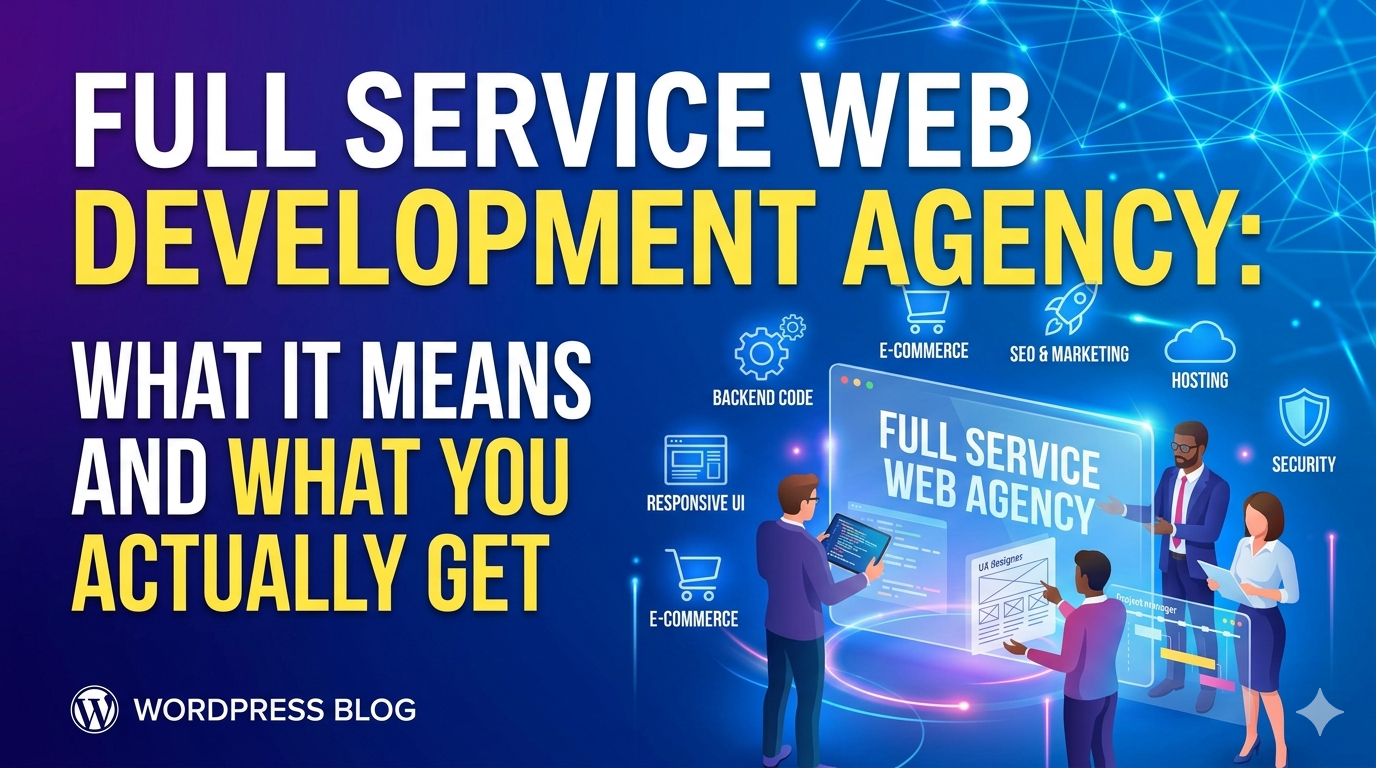
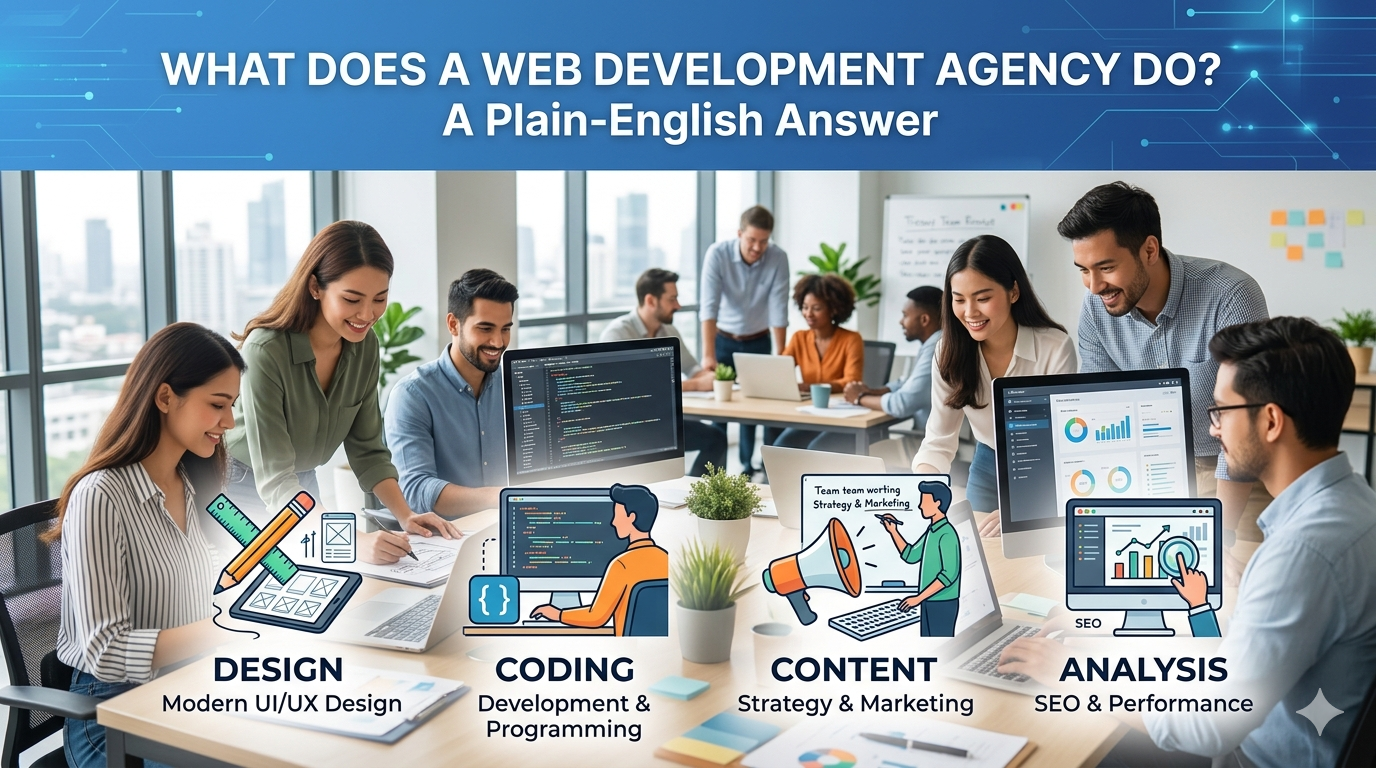
For context on what web development agencies do broadly, see Web Development Agency: The Complete Guide for Small Businesses. For pricing specifics, see Web Development Agency Pricing: What It Really Costs in 2026. For the agency vs. freelancer decision, see Web Development Agency vs. Freelancer: Which Is Right for Your Business?. If you want to understand the full service model, see Full Service Web Development Agency: What It Means and What You Actually Get. To evaluate whether hiring an agency is worth it at your stage, see Is It Worth Hiring a Web Development Agency?.
Frequently Asked Questions
Should a startup hire a web development agency or a freelancer?
For a simple marketing site, a skilled freelancer can be cost effective. For an MVP or web application that requires multiple disciplines (design + development + project management), an agency delivers better outcomes and lower coordination risk. The key question is: does the project have enough complexity that someone needs to manage it for you?
How much should a startup budget for a website?
A professional marketing site for a startup typically runs $5,000-15,000. An MVP or early application is $15,000-50,000+. Budget below these ranges usually means either DIY tools or freelancers for simple scopes.
What should a startup’s first website accomplish?
At minimum: clearly communicate who you are and what you do, for whom, and why it matters. Include a clear call to action (sign up, book a demo, contact us). Load fast and look professional on mobile. SEO and conversion optimization can be built in from the start but should not delay a functional launch.
How do I evaluate a web development agency if I do not have technical knowledge?
Look at live portfolio work (open actual sites, test speed, check mobile). Talk to past clients directly. Ask how they have handled scope changes and problems on previous projects. Ask them to explain their technical approach in plain language. Trust your instincts on communication quality during the sales process.
What should be in the contract with a startup agency?
At minimum: scope definition, payment milestones tied to deliverables, revision rounds included, timeline, change order process, IP ownership (you own all deliverables), and post launch support terms. Have a lawyer review any contract above $10,000.