Choosing a website design company is one of the most consequential vendor decisions a small business makes. Get it right and you have a partner who helps you grow online for years. Get it wrong and you are looking at a slow, expensive rebuild six months later, or worse, a finished product that never gets used because it does not work.
The challenge is that the web design market is full of options at every price point, with wildly different quality levels and no universal standards. Anyone can call themselves a web designer. Anyone can build a portfolio site. Sorting the reliable partners from the risky ones requires asking the right questions and knowing what to look for.
This guide gives you a practical framework for how to choose a website design company, from defining your needs to evaluating proposals to making the final call.
Start With Your Own Requirements
Before evaluating anyone else, get clear on what you actually need. This step is skipped more often than any other, and it is the most preventable source of bad outcomes.
Answer these questions before reaching out to any vendor:
What is the primary purpose of this website? Lead generation, e-commerce, brand credibility, customer support, appointment booking, something else? Your answer should drive every design and development decision. A site built to generate leads looks and works differently than a site built to support existing customers.
Who is your target customer, and what do they need to see? What information does your ideal customer need before they will contact you or buy? What objections do they typically have? Where are they in their decision process when they find you?
What does success look like at six months? Specific metrics, number of leads per month, conversion rate, organic search traffic, create accountability. Vague goals like “better website” do not.
What is your budget range? You do not need a precise number, but you need a realistic range. If you know you have $5,000-$8,000, tell vendors upfront. It filters out mismatches on both ends and lets proposals be scoped appropriately.
What is your timeline? If you have a hard launch date (product launch, seasonal event, marketing campaign), be upfront about it from the first conversation.
What to Look for in a Website Design Company
Relevant Portfolio
The strongest predictor of what a design company will produce for you is what they have produced for businesses like yours. Not “impressive work” in the abstract, work for businesses with similar goals, similar audiences, and similar complexity.
When reviewing a portfolio:
- Are the sites functional, fast, and clearly organized, or just visually impressive?
- Do the designs feel appropriate for the industries they serve, or do they all look like the same template in different colors?
- Can you find any of the portfolio sites in Google search for relevant terms? (This tells you whether the company cares about performance and SEO or just aesthetics)
- Do the sites have clear calls to action and conversion architecture, or are they purely informational?
Ask for case studies, not just screenshots. What was the goal? What did they build? What happened after launch?
A Defined Process
Reliable website design companies have a defined, documented process. They know what phases a project goes through, what inputs they need from clients at each stage, and how long each phase takes. They can describe this process clearly without being prompted.
Red flag: a company that skips straight to “when can we start” without asking about your business, your customers, and your goals.
Green flag: a company that begins with discovery questions before proposing anything, and who can show you a project roadmap that explains what happens between kickoff and launch.
Communication Style
The quality of communication before you hire someone is a reliable preview of communication during the project. Are they responsive? Do they answer the question you asked, or redirect to a sales conversation? Do they acknowledge the complexity of your situation, or immediately reassure you that everything is simple?
A good test: ask a technically specific question (“How do you approach Core Web Vitals in your builds?” or “Do your sites come with a content management system I can update myself?”). How they answer reveals whether they have real technical depth or just polished sales responses.
Post Launch Support
A website is not finished when it launches. It needs security updates, performance monitoring, content updates, and periodic optimization. Find out before you sign anything:
- What does ongoing support look like after launch?
- Do you offer a maintenance plan, and what does it include?
- If something breaks, what is the response time and how is it handled?
- Will I be able to update content myself, or do I need to come back to you for every change?
Agencies that have no post launch support offering are telling you something about their long term relationship priorities. See our overview of website maintenance considerations for context on what ongoing care actually involves.
Ownership and Access
You should own your website. Full stop. This means:
- The domain is registered in your name, not the agency’s
- You have admin access to the hosting account
- You have access to all source files, design files, and CMS credentials
- There is no proprietary lock in that prevents you from moving to another provider
Some agencies build on proprietary platforms or register domains in their own name. This creates leverage they should not have. Any reputable company will give you full ownership and access without hesitation.
Questions to Ask Before Signing
These questions separate high quality partners from those who will struggle to deliver:
Who will actually work on my project? At agencies, the salesperson is often not the person doing the work. Ask to meet the designer and developer assigned to your project. Understand the team structure.
What do you need from me to get started, and at each stage? This question reveals how structured their process is. Agencies with real processes know exactly what client deliverables they need and when.
How do you handle revisions and scope changes? Every project has some. How this is handled, flat fee revisions, hourly overages, a clear scope change process, tells you how the relationship will function when things get complicated.
Can you show me the CMS you will build on, and walk me through how I would update content myself? If you cannot update your own site without calling them, you have a dependency problem.
What does success look like to you at six months post launch? The answer tells you whether they think about outcomes or just deliverables. An agency that defines success as “site launched” is different from one that defines success as “20% increase in organic leads.”
What happens if you miss the deadline? Not whether they will, but what the process is if they do. Professional agencies have answers. Unprofessional ones get defensive.
Red Flags to Watch For
Even if a company looks good on the surface, these patterns are worth taking seriously:
- No real portfolio or vague portfolio. Screenshots of template sites, sites that do not exist anymore, or work that all looks identical is a warning sign.
- No contract or vague contract. A one-page “agreement” with no deliverables, timeline, or scope definition is a setup for disputes.
- Unclear pricing. If you cannot get a clear explanation of what is included in the quoted price and what is not, the invoice will surprise you.
- Resistance to references. A company that cannot produce two or three client references willing to take a phone call is not confident in their client relationships.
- Guaranteed rankings or traffic promises. No credible agency promises specific SEO outcomes in advance. If they guarantee page one rankings, they are either lying or doing things Google penalizes.
- Long payment terms that favor them. Standard practice is a 50% deposit at signing and 50% at launch or delivery. Agencies demanding 100% upfront or very large deposits before any work is completed are a risk.
Comparing Proposals
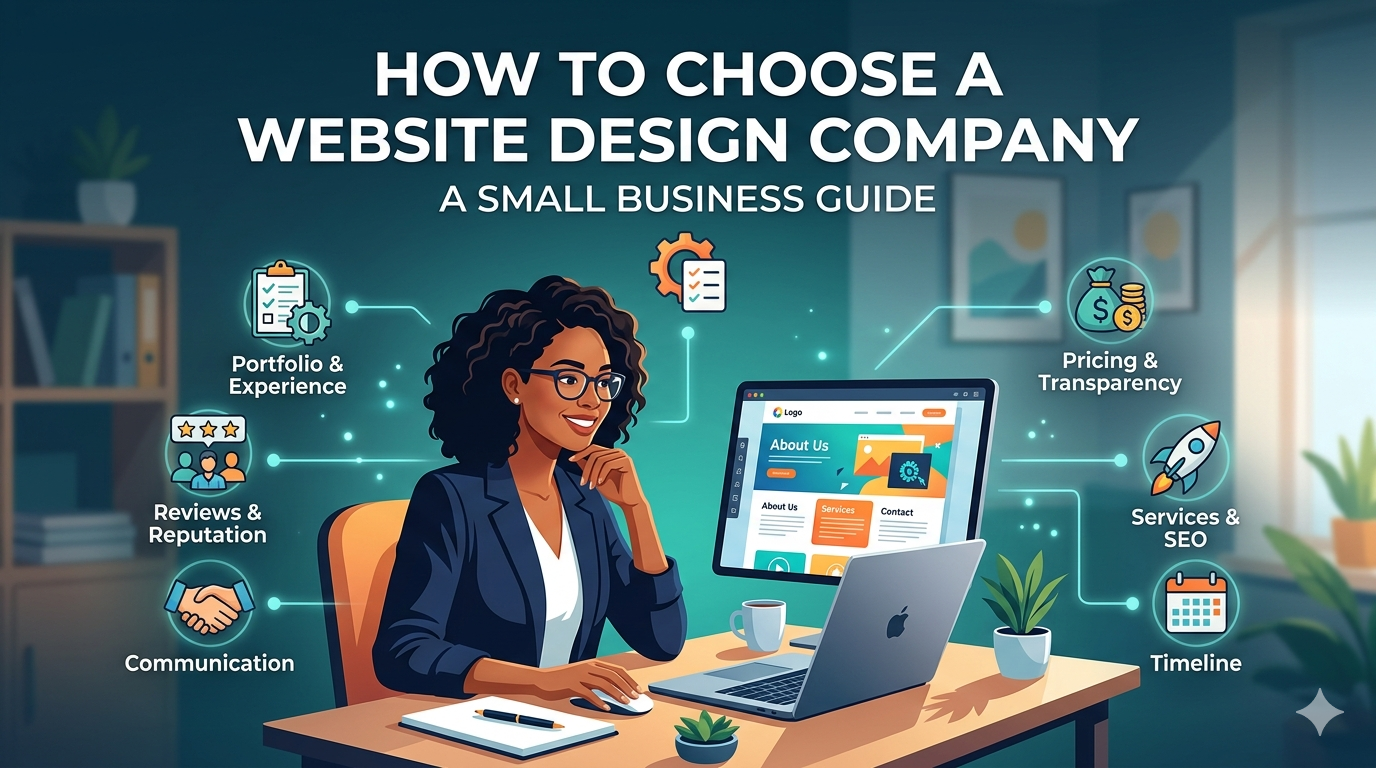
Once you have proposals in hand, compare them on these dimensions rather than just price:
- Scope: What exactly is included? How many pages? Does it include copywriting? Photography? SEO setup? Post launch support?
- Process: How is the project managed? What are the checkpoints where you review and approve?
- Timeline: Is the proposed timeline realistic, and does it account for your review time?
- Technology: What platform will the site be built on? Why? Will you be able to manage it yourself?
- Communication: How and how often will they communicate progress?
The cheapest proposal is almost never the best value. The proposal that most clearly articulates what they will deliver, how, and what happens afterward is usually the safest investment.
For a broader view of what a professional website project involves, see our website design for small business guide and our breakdown of website design costs.
What Working with DevVerx Looks Like
At DevVerx, we have built websites for small businesses across industries for over a decade. Our process starts with understanding your business, who your customers are, what makes you different, and what your website needs to accomplish. Design and development happen under one roof, which eliminates the translation friction that slows down two vendor projects.
Our UI/UX design services are built around conversion and performance, not just aesthetics. Every site we build is mobile first, optimized for Core Web Vitals, and delivered with training so clients can manage their own content.
Our 4.8/5 client rating is the result of doing what we say we will do, communicating honestly when complications arise, and staying available after launch.
If you are evaluating web design companies and want a straight conversation about what your project requires and what you should expect to pay, contact our team. No hard sell, just an honest assessment.